

Streamlining hospital workflows: Alleviating nurses' cognitive burdens
16-Jan-2026

5-minute read
In hospitals, the most valuable clinical asset is often the nurse and many are reaching their limits. According to Nurse.com’s 2024 Nurse Salary and Work-Life Report, 59% of nurses said they experienced burnout in the past two years.1
Today, nurses are expected to manage too much, too fast, making it harder to stay focused during high-stakes care.
Redesigning workflows and integrating technologies with intention can help hospitals relieve some of that burden. Streamlined workflows don’t replace human judgment — they protect it by eliminating distractions and unnecessary steps.
Understanding the value of streamlined systems starts with seeing how cognitive burden impacts nurses.
The roots of cognitive burden and its link to burnout
Cognitive burden refers to the mental effort required to manage tasks, process information and make decisions. Nurses face cognitive overload daily due to the bombardment of calls, texts, alerts and alarm notifications, plus complex or incomplete information sent from multiple sources, devices and other technologies.2 That burden compounds with every task switch or interface they encounter throughout their shift.
A 2022 study in Nursing Outlook found that "workflow turbulence" — the unpredictability and inefficiency of poorly designed systems — increases nurses’ mental workload and contributes to emotional exhaustion and job dissatisfaction.3 These conditions are strongly linked to stress and burnout, especially when nurses must make decisions while navigating multiple disconnected tools or managing unnecessary documentation.
“Hospitals often prioritize reducing the burden on nurses when evaluating new technologies,” said Beth Batcher, MSN, APRN, CNS-AG, CEN, Clinical Nurse Specialist in an Emergency Department, Acute Trauma Resuscitation Room and Observation Unit, in San Diego, California. “However, sometimes decisions are influenced more by cost or organizational goals rather than fully considering the impact on nursing workflows.”
Recognizing these drivers is critical to creating environments that protect nurses’ focus, energy and well-being.
Emerging tools that help ease the burden
In recent years, several promising tools have emerged that demonstrate how advanced technology can support nurses as they care for their patients. These include:
- Ambient clinical monitoring: AI-enabled sensors provide clinicians with data and automated workflow tracking
- Smart nurse communication platforms: Mobile apps that combine alerts, texts and nurse call notifications in one interface
- Clinical workflow orchestration platforms: Tools that unify information from multiple systems into a centralized, intuitive dashboard
- Digital dashboards: Automatically updated dashboards that display key patient and care team info
Well-established tools improving the nursing workflow
Many hospitals already use technologies that help to reduce nurses’ mental strain. These tools do more than automate — they can help simplify decision-making. The following solutions are helping nurses focus on patient care.
Electronic health records (EHRs)
Well-optimized EHR systems support real-time bedside documentation and minimize duplication. A suboptimal design or fragmented EHR can increase nurses’ cognitive load and interfere with safe, efficient care, according to a study.4
Bar code medication administration (BCMA)
BCMA technology scans patient and medication barcodes at the bedside. It replaces cognitive reliance on manual checks with automated verification to help nurses stay focused on patients and safe medication administration.
Automated dispensing cabinets (ADCs)
ADCs offer secure access to medications close to the point-of-care. They streamline workflows by reducing the need for pharmacy trips and manual inventory tracking.
Robotic process automation (RPA)
RPA automates repetitive tasks like appointment scheduling, data entry and claims processing.
Artificial Intelligence (AI)
AI-driven tools can be designed to help enhance patient care efficiency, increase patient safety and reduce the burden on nurses. These tools can assist nurses in analyzing large datasets, predicting potential complications and thus improving decision-making and cognitive workload.5
Beyond enterprise-level tools, individual clinical devices can also play a powerful role in streamlining workflows.
Reducing mental load in critical settings
The LIFEPAK 35 monitor-defibrillator is a strong example of how well-designed equipment (used in patient care) can reduce cognitive strain, especially in high-acuity environments.6
“The LIFEPAK 35 really helps streamline workflows and reduce cognitive load for nurses,” said Batcher. “By combining ECG, blood pressure, pulse ox and defibrillation into one device, the team isn’t scrambling to set up multiple machines during a code. The large, color-coded screen makes it easy to see and interpret data fast, which is crucial when every second counts.”
Batcher emphasized that the LIFEPAK 35’s advanced technology helps support clinical excellence.6,7 “It has the unique cprINSIGHT feature that reduces pauses during compressions and its algorithm detects shockable rhythms without stopping CPR8,” she said.
After every synchronized shock, the device automatically prompts the team to reevaluate the patient, Batcher said. It also records and sends data automatically,7 reducing time to treatment and keeping the focus on the patient.9
With its intuitive and customizable touchscreen, the device features an easy-to-use display with no hidden submenus.6,7 Built-in data capture, connectivity to stream/transmit data and medication/event time reminders7 are designed to help reduce interruptions to help nurses maintain focus.
When tools are designed to align with clinical workflows, even a single device like the LIFEPAK 35 can meaningfully lighten the mental load6 during high-stakes care.
Integrating new technologies
To unlock the full value of these tools, systems must communicate and function seamlessly. Integration ensures that their benefits extend across the entire care environment.
Disjointed health information technology (IT) systems amplify cognitive burden rather than reduce it. When EHRs, medication management tools, alarms and monitoring devices aren’t integrated, nurses must often juggle different logins, interfaces and alert types while delivering care. This burden of remembering and prioritizing information in a constantly changing environment contributes to mistakes.2
Integration doesn’t only reduce clicks. It also:
- Minimizes the need to constantly shift attention between systems
- Reduce cognitive load with consolidated and streamlined communication2
- Saves time otherwise spent compensating for poor system design
“Investing in integrated, seamless workflows is crucial for patient care and nurse retention because it simplifies tasks, reduces errors and allows nurses to focus on what matters most —patient care,” said Batcher. “For nurses, smoother workflows reduce stress and burnout, fostering job satisfaction and increasing retention.”
These tools and design principles are more than theoretical. Hospitals implementing integrated systems can see measurable improvements. Clinical decision support systems have been shown to improve patient outcomes by streamlining workflows, reducing mortality rates and facilitating evidence-based decision making. They can also enhance clinical satisfaction by providing real-time feedback and reducing cognitive burden.10
Designing for cognitive relief
Reducing nurses’ mental burden starts with thoughtful system design that supports safe, efficient care without adding to cognitive overload. As technology evolves, the following principles are essential to guiding tools that truly help rather than hinder:
- Simplify user interfaces across systems
- Minimize redundant documentation
- Automate repetitive tasks without removing clinical control
- Prioritize critical alerts and mute non-urgent ones
- Ensure devices and platforms integrate seamlessly
When systems support nurses, cognitive space is freed for what matters most: clinical decisions, meaningful interactions and safe care delivery.
Creating systems that support clinical decision-making is more than an efficiency play — it’s a strategy for safer, more sustainable care.
Learn more about Emergency Care
Related

LIFEPAK 35 monitor/defibrillator
The LIFEPAK 35 monitor/defibrillator for hospitals and EMS is a future-ready device designed to promote confident cardiac care, enable clinical excellence and deliver in demanding environments.
Learn more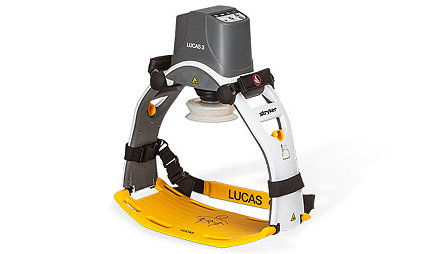
LUCAS 3, v3.1 chest compression system
Deliver high-performance, continuous chest compressions.
Learn more
LIFENET System
The LIFENET System is a comprehensive cloud-based platform that intelligently manages and delivers patient information and device data EMS and hospital teams need to work together seamlessly.
Learn more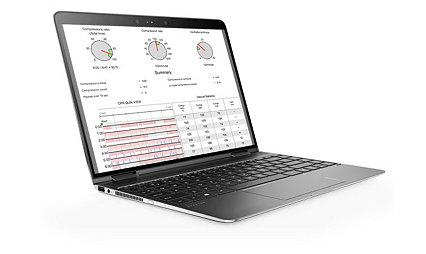
1. 2024 Nurse Salary and Work-Life Report, Jimenez S, editor, Nurse.com, Relias LLC.
2. Collins R, Clinician Cognitive Overload and Its Implications for Nurse Leaders, Nurse Leader, February 2020;18(1):44-47.
3. Jennings BM, Baernholdt M, Hopkinson SG, Exploring the turbulent nature of nurses’ workflow Nursing Outlook, 2022;70(3):440-50.
4. Moy AJ, Hobensack M, Marshall K, et al., Understanding the perceived role of electronic health records and workflow fragmentation on clinician documentation burden in emergency departments, Journal of the American Medical Informatics Association, 2023;30(5):797-808.
5. Dailah HG, Koriri M, Sabei A, et al., Artificial Intelligence in Nursing: Technological Benefits to Nurse’s Mental Health and Patient Care Quality. Healthcare 2024, 12, 2555.
6. Data on file, Stryker HFVR 3338373.
7. Data on file, Stryker OI 3350840.
8. de Graaf, C., Beesems, S. G., Oud, S., Stickney, R. E., Piraino, D. W., Chapman, F. W., & Koster, R. W. (2021). Analyzing the heart rhythm during chest compressions: Performance and clinical value of a new AED algorithm. Resuscitation, 162, 320-328
9. Data on file, Stryker OI 3337705.
10. Chen Z, Liang N, Zhang H, et al. Harnessing the power of clinical decision support systems: challenges and opportunities. Open Heart 2023;10:e002432.
Content sponsored by Stryker.
CONTENT SPONSORED BY Stryker
Stryker, a global leader in medical technologies, develops innovative solutions that advance patient care and strengthen healthcare outcomes.
Driven by a passion for progress, Stryker empowers healthcare professionals, including nurses, to overcome healthcare’s biggest challenges.
Beth Batcher may have or have had a financial or advisory relationship with Stryker. The opinions expressed by Beth Batcher are hers and not necessarily those of Stryker.
This information is intended solely for the use of healthcare professionals. A healthcare professional must always rely on his or her own professional clinical judgment when deciding whether to use a particular product when treating a particular patient. Stryker does not dispense medical advice and recommends that healthcare professionals be trained in the use of any particular product before using the product.
Stryker Corporation or its divisions or other corporate affiliated entities own, use, or have applied for the following trademarks or service marks: cprINSIGHT, LIFEPAK, Stryker. All other trademarks are trademarks of their respective owners or holders.
EC-L35-COMM-2556151_REV-0_en_us