


Advancing urinary incontinence care
PrimoFit Flow uses continuous suction to support early catheter removal while keeping patients comfortable. It serves as an alternative to external collection devices or, when appropriate, indwelling catheters and addresses the #1 risk factor of catheter-associated urinary tract infections (CAUTI).1
- Can be left in place for up to 24 hours
- Convenient time/date label encourages compliance to protocol
- Blue liners are easy to see after removal to reduce the risk of misplacement
- Tiered suction tubing adapter connects to hospital suction tubing
- Semi-closed top reduces the risk of leakage while maintaining airflow
- Reorder #5406

$340-450M
U.S. healthcare costs from CAUTIs2
Supporting care and efficiency
Designed with both caregivers and patients in mind, this system helps streamline workflow and supports patient comfort. A skin-friendly, ultra-soft fabric helps divert urine away from the skin, while transparent film allows for ongoing skin assessment. Together, these features support effective management of male urinary incontinence – while also addressing the essential needs of application, securement and performance.

Easy to apply
- Customizable fit eliminates the need for sizing charts and split liner helps make application easy
- Adhesive pad and base adhesive are skin-friendly and allow for easy application and removal

Stays in place
- Clear flex adhesive contours to patient anatomy and stays in place even when anatomy causes tension within the device
- 2-layer design promotes breathability to aid securement

Diverts urine
- Foam stabilizer supports the bottom of the device to promote continuous urine diversion
- Provides urine output in the side-lying position and if twisting occurs
Help address the risk of CAUTI
Your bed-bound patients deserve the best possible care when it comes to urine management.

Approximately 75% of hospital-acquired urinary tract infections are associated with an indwelling urinary catheter.1

Each day the indwelling urinary catheter remains, a patient has a 3-7% increased risk of acquiring a CAUTI.3

It’s estimated that 10-25% of acute care hospitalized patients and 7.5-10% of patients in long-term care facilities are catheterized at any one time.4
FAQs
Replace PrimoFit Flow at least every 24 hours, or sooner if soiled with stool or bodily fluids other than urine. Dispose of the device per hospital protocol and local regulations.
Replace tubing and empty and/or replace suction canister per hospital protocol.
PrimoFit Flow is designed to divert urine away from a patient into a suction canister using low continuous suction. It is not designed to be connected to a gravity-dependent drainage bag.
Set vacuum to low, continuous suction at a minimum of 60 mmHg. Always use the minimum amount of suction necessary.
PrimoFit Flow may be complementary to an early mobility program. PrimoFit Flow is designed to serve as a transition between an immobile patient who requires an indwelling urinary catheter to a mobile patient who is able to ambulate to the commode or bathroom. The devices should be assessed by medical and nursing staff and discontinued when independent or assisted toileting is feasible and during patient ambulation.
Interested in learning more? Connect with an expert.
Thank you! We received your information and a Stryker Sage representative will be in contact.






Training video

Sage PrimaFit External Urine Management for the Female Anatomy
PrimaFit is designed to bend, fit and stay in place. It’s customizable so you can find a comfortable curve to fit your patients.
Learn more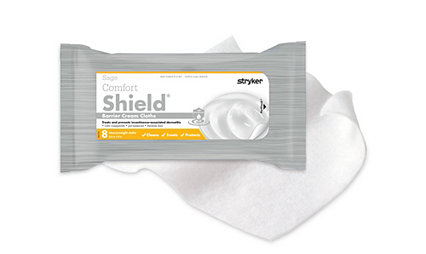
Sage Comfort Shield Barrier Cream Cloths
Our basinless incontinence care treats and prevents incontinence-associated dermatitis (IAD).
Learn more
Sage M² Microclimate Body Pads
Protect your patient's skin and prevent incontinence-related complications with Sage M² Microclimate Body Pads.
Learn moreReferences:
1. Centers for Disease Control and Prevention, Catheter-associated Urinary Tract Infections (CAUTI). Available at: https://www.cdc.gov/hai/ca_uti/uti.html.
2. Agency for Healthcare Research and Quality (AHRQ), Toolkit for Reducing Catheter-Associated Urinary Tract Infections in Hospital Units: Implementation Guide, Rockville, MD, October 2015.
3. Centers for Disease Control (CDC) National Healthcare Safety Network, Urinary Tract Infection (Catheter-Associated Urinary Tract Infection (CAUTI) and Non-Catheter-Associated Urinary Tract Infection (UTI) Events. January 2021.
4. APIC Guide to the Elimination of Catheter-Associated Urinary Tract Infections (CAUTIs) 2008.
SAGE-UM-SYK-697597_REV-3_en_us