


Reshaping how fecal incontinence is managed
Current indwelling fecal management systems (FMS) can leak up to 70%.2 To address this issue, hygh-tec drainage was engineered with air technology to synchronize with the sphincter muscles, allowing it to reduce stool leakage.1,3,4*
The results of a 2025 study published in Australian Critical Care demonstrated:3

90% sealing efficiency

0 device-related serious adverse clinical events

The difference is the design
The polyurethane (PUR) material is lightweight because it’s filled with air, not water.1 The unique dumbbell design provides adaptability to anatomical structures1 and reduced stool leakage.3
Dignity matters
The value of preserving patients’ dignity in their most vulnerable time can’t be quantified. By providing that respect, both for staff and patients, this fecal diversion system can have a real impact.
Up to 40% of ICU patients experience fecal incontinence,5 a challenge that can increase the risk of skin injury, infection and distress for patients.

Care with confidence
hygh-tec drainage has demonstrated reduced stool leakage3 compared to first-generation FMS.2* This reduced stool leakage can help support improved patient outcomes and more efficient workflows in the critical care setting.6
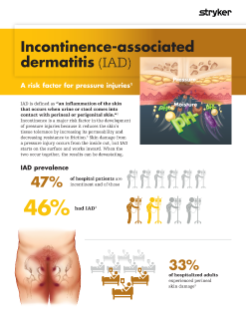
Diverting semi-liquid and liquid stool away from the skin can help keep the skin dry, helping to address a risk factor of incontinence-associated dermatitis (IAD),6 hospital-acquired pressure injuries (HAPI)8 and spread of C. difficile infection associated with acute fecal incontinence.9
FAQs
The drainage head is inflated with 85mL of air and can be filled with the air syringe included in the kit. The syringe has an indicator line at 85mL. Additionally, you can use the pre-anal balloon segment after inflation to double-check the inflation level.
A Luer lock syringe (not included in the kit) can be used for irrigation of the device.
No. Lubricant is not included in the kit but per the IFU a lubricant/lubricant gel should be used when preparing the patient and the system.
A Luer slip syringe (not included in the kit) can be used to collect stool samples from the device.
The system should be irrigated once per shift or as needed. Always refer to the Instructions for Use (IFU) and institutional policy for full instructions.
The device is MR conditional, meaning the device can be safely used in an MRI setting only if specific conditions are met. Refer to IFU for specific conditions.
Interested in learning more? Connect with an expert.
Thank you! We received your information and a Stryker Sage representative will be in contact.




References:
1. Sage Products, LLC. Data on file. 01/2026. 2. Sammon, MA, Montague, M, Frame, F, et al., (2015). Randomized controlled study of the effects of 2 fecal management systems on incidence of anal erosion. Journal of Wound Ostomy Continence Nursing, 42(3), 279-286. 3. Gutting T, Brobeil A, Strach L, et al., Sealing efficiency and safety of a polyurethane-based fecal management system in intensive care-Results from a real-world study. Australian Critical Care. 2025 Sep;38(5):101296. 4. Sage Products, LLC. Data on file, 02/2026. 5. García, CB, Binks, R, De Luca, et al., (2013). Expert Recommendations for Managing Acute Faecal Incontinence with Diarrhoea in the Intensive Care Unit. Journal of the Intensive Care Society, 14(4_suppl), 1-9. 6. Sheth, H., Rao, S., & Karthik, V. (2023). Clinical and Health Economic Evaluation of a Novel Device for Fecal Management in Bedridden Patients. Indian journal of critical care medicine: peer-reviewed, official publication of Indian Society of Critical Care Medicine, 27(10), 759–765. 7. Gray M, Bliss DZ, Doughty DB, et al., Incontinence-associated dermatitis: a consensus. Journal of Wound Ostomy Continence Nursing, 2007 Jan-Feb;34(1):45-54; quiz 55-6. 8. Kayser SA, Phipps L, VanGilder CA, et al., Examining Prevalence and Risk Factors of Incontinence-Associated Dermatitis Using the International Pressure Ulcer Prevalence Survey. Journal of Wound Ostomy Continence Nursing. 2019 Jul/Aug;46(4):285-290. 9. Whiteley I, Sinclair G, Lyons AM, et al., (2014). A retrospective review of outcomes using a fecal management system in acute care patients. Ostomy/Wound Management, 60(12), 37–43.
* Based on a single-arm, prospective, descriptive study. Leakage defined as considered visible and pronounced contamination of patient pad.
SAGE-IDFM-SYK-3098815_REV-0_en_us