

Mako Total Hip
Elevating total hip procedures
For over 15 years, Mako Total Hip has elevated total hip procedures for patients and surgeons.
Imagine using the knowledge that comes from a CT-based plan that allows you to capture each patient’s unique anatomy for primary procedures. Pair this with Mako’s AccuStop™ haptic technology, which has been shown to help surgeons precisely and accurately single-stage ream what they’ve planned during Mako primary total hip procedures.1

Mako Total Hip
For primary hip replacement

The features of Mako Total Hip SmartRobotics™ are designed to help you optimize component positioning1 enhance functional outcomes2 and elevate surgical experience.3,4
Know more.1
It all starts with a CT scan that creates a 3D image of your patient’s unique anatomy. Plan the sizing and positioning of implants, as well as incorporate Functional Hip Positioning™ to help you optimize component positioning.
- CT-based platform designed to help optimize implant size and placement1
- Plan implant center of rotation
- Incorporate pelvic tilt analysis to understand the hip/spine relationship
- Visualize potential implant or bony impingement during pre-operative planning
- Guided neck-resection tool
- Hip length and offset feedback
Ream less.5
With the use of AccuStop haptic technology, studies have demonstrated greater bone preservation,5 reduced blood loss2 and greater ability to reproduce hip biomechanics6-10 versus manual technique.
- Ability to single stage ream
- Ream constrained to planned center of rotation
- Audible, visual and tactile feedback while guided reaming
- Accurate bone preparation to plan1
- Use of AccuStop haptic technology to help impact cup at the desired inclination and version1,2,6,8,12,13
Clinical success of Mako Total Hip
Based on 15 years of clinical data in primary total hip replacements
Improved patient
outcomes
Studies have shown that Mako Total Hip patients are significantly less likely to be aware of their hip in daily circumstances compared to manual patients.2,9,18
Less surgeon mental
and physical fatigue
Mako Total Hip may reduce physical and mental demand for a surgeon that may lead to an improved surgical experience, especially while reaming, when compared to manual total hip arthroplasty.3,4
Reduced
dislocation rate
Studies have shown dislocation rates in Mako Total Hip are significantly reduced compared to manual patients.1,14,15
Accurate restoration
of center of rotation
Center of rotation of the hip is more consistently replicated using Mako Total Hip compared to manual surgery.12
Decreased length
of stay
Mako Total Hip demonstrated a decreased length of stay compared to manual surgery.16
Reduced
costs
Mako Total Hip showed a reduced utilization of post index rehabilitation services such as skilled nursing home, health aid and impatient rehab.11
In a study conducted in the United States, Mako Total Hip showed reduced 90-day EOC cost compared to manual THA over 5 year.11
In a Markov model study conducted in the United States, Mako Total Hip showed reduced cumulative cost compared to manual THA for Medicare and private payer over 5 years.17
The economic outcomes reported in this study are based on country‑specific healthcare systems, pricing structures and clinical practices - may not be generalizable to other geographies.
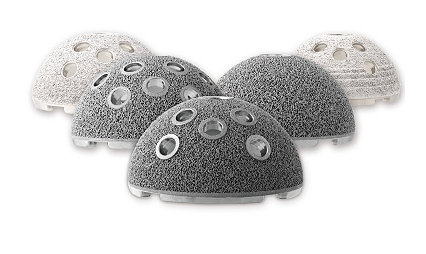
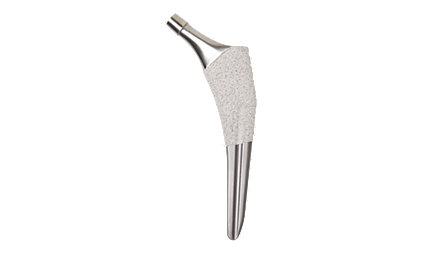
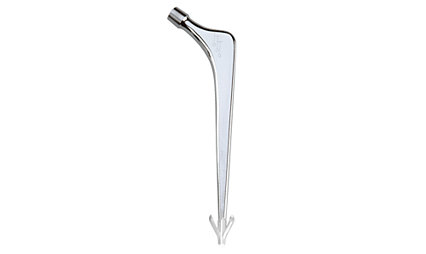
Compatible implants

References
- Illgen RL Nd, Bukowski BR, Abiola R, et al. Robotic-assisted total hip arthroplasty: outcomes at minimum two-year follow-up. Surg Technol Int. 2017;30:365-372
- Bukowski BR, Anderson P, Khlopas , Chugtai M, Mont MA, Illgen RL. Improved functional outcomes with robotic compared with manual total hip arthroplasty. Surg Technol Int. 2016;29:303-308.
- Caba M, Gains C, Nessler J, Frye B, Scholl L, Sequeira SB, Mont M. Physical and mental demand during direct anterior total hip arthroplasty: Comparison of robotic-assisted and conventional techniques. J Orthop. 2024 Jul 14;62:126-132. doi: 10.1016/j.jor.2024.07.001. PMID: 39620166; PMCID: PMC11602540.
- Abbruzzese K, Valentino AL, Scholl L, Hampp EL, Chen Z, Smith R, Byrd ZO, Mont MA. Physical and Mental Demand During Total Hip Arthroplasty. Orthop Clin North Am. 2022 Oct;53(4):413-419. doi: 10.1016/j.ocl.2022.06.005. Epub 2022 Sep 14. PMID: 36208884.
- Suarez-Ahedo C, Gui C, Martin TJ, Chandrasekaran S, Lodhia P, Domb BG. Robotic-arm assisted total hip arthroplasty results in smaller acetabular cup size in relation to the femoral head size: a matched-pair controlled
- Nawabi DH, Conditt MA, Ranawat AS, et al. Haptically guided robotic technology in total hip arthroplasty: a cadaveric investigation. Proc Inst Mech Eng H. 2013;227(3):302-309. doi:10.1177/0954411912468540 study. Hip Int. 2017;27(2):147-152. doi:10.5301/hipint.5000418
- Elson L, Dounchis J, Illgen R, et al. Precision of acetabular cup placement in robotic integrated total hip arthroplasty. Hip Int. 2015;25(6):531-536. doi:10.5301/hipint.5000289
- Domb BG, El Bitar YF, Sadik AY, Stake CE, Botser IB. Comparison of robotic-assisted and conventional acetabular cup placement in THA: a matched-pair controlled study. Clin Orthop Relat Res. 2014;472(1):329-336. doi:10.1007/s11999-013-3253-7
- Domb BG, Chen JW, Lall AC, Perets I, Maldonado DR. Minimum 5-year outcomes of robotic-assisted primary total hip arthroplasty with a nested comparison against manual primary total hip arthroplasty: a propensity score-matched study. J Am Acad Orthop Surg. Accepted manuscript. Published online February 25, 2020. doi:10.5435/JAAOS-D-19-00328
- Domb B, Redmond J, Louis S, Alden K, Daley R, LaReau J, et al. Accuracy of component positioning in 1980 total hip arthroplasties: a comparative analysis by surgical technique and mode of guidance. The Journal of Arthoplasty. 30(2015)2208-2218
- Pierce J, Needham K, Adams C, Coppolecchia A, Lavernia C. Robotic assisted total hip arthroplasty: a 90-Day episode of care cost analysis. Presented at: The Professional Society for Health Economics and Outcomes Research (ISPOR) Annual Meeting; May 18-20, 2020; Virtua
- Jerabek SA, Carroll K, Maratt JD, Mayman DJ, Padgett DE. Accuracy of cup positioning, COR restoration and achieving desired hip length and offset following robotic THA. Presented at: Computer Assisted Orthopaedic Surgery (CAOS) 14th Annual Meeting; June 18-21, 2014; Milan, Italy.
- Esposito CI, Lipman J, Carroll KM, Jerabek SA, Mayman DJ, Padgett DE. Acetabular component cup placement using a haptically guided robotic technology in total hip arthroplasty. Presented at: 16th EFORT Congress; May 27-2019, 2015; Prague, Czech Republic.
- Bendich I, Vigdorchik JM, Sharma AK, Mayman DJ, Sculco PK, Anderson C, Della Valle AG, Su EP, Jerabek SA. Robotic Assistance for Posterior Approach Total Hip Arthroplasty Is Associated With Lower Risk of Revision for Dislocation When Compared to Manual Techniques. J Arthroplasty. 2022 Jun;37(6):1124-1129. doi: 10.1016/j.arth.2022.01.085. Epub 2022 Feb 4. PMID: 35124193.
- Shaw JH, Rahman TM, Wesemann LD, Z Jiang C, G Lindsay-Rivera K, Davis JJ. Comparison of Postoperative Instability and Acetabular Cup Positioning in Robotic-Assisted Versus Traditional Total Hip Arthroplasty. J Arthroplasty. 2022 Aug;37(8S):S881-S889. doi: 10.1016/j.arth.2022.02.002. Epub 2022 Feb 8. PMID: 35143923.
- Heng YY, Gunaratne R, Ironside C, Taheri A. Conventional vs robotic arm assisted total hip arthroplasty (THA) surgical time, transfusion rates, length of stay, complications and learning curve. J Arthritis. 2018;7(4):1-4. doi:10.4172/2167-7921.1000272
- Maldonado D, Go C, Kyin C, Rosinsky J, Shapira J, Lall A, Domb B. Robotic arm-assisted total hip arthroplasty is more cost-effective than manual total hip arthroplasty: A Markov Model Analysis. J Am Acad Orthop Surg 2020;00:1-9. DOI: 10.5435/JAAOS-D-20-00498
- Domb BG, Quesada-Jimenez R, Barda SR, et al. Ten-year functional outcomes following robotic-assisted total hip arthroplasty: a case series. J Arthroplasty. 2026 Jan 19:S0883-5403(26)00053-7.
JR-MTHA-SYK-2963400