Sales / General Contacts |
Product Quick Links
Patient InformationTriathlon Partial Knee Resurfacing (PKR)
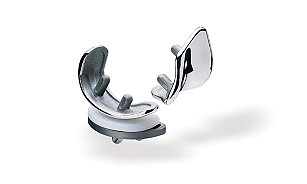
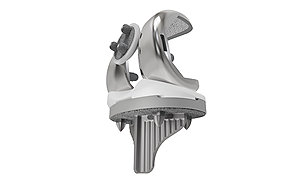
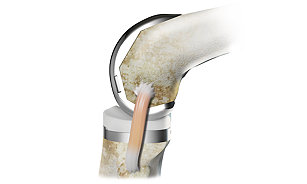
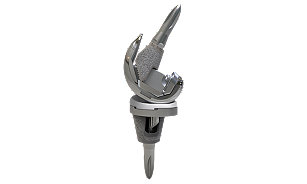
Triathlon PKR is a fixed bearing unicompartmental, or unicondylar, knee that blends the ease and familiarity of a measured resection system with the control of a gap balancing system. This bone-preserving approach eliminates the need to violate the intramedullary (IM) canal, and provides the potential to return patients back to their normal activities.1,2
The Triathlon Partial Knee Resurfacing (PKR) System was designed to make unicompartmental knee resurfacing (UKR) potentially easier and more straight forward. The patented single radius design, coupled with the ability to balance the flexion and extension gaps, is intended to produce more stable, natural knee motion.3,4 The result is an elegant solution, helping to restore normal physiologic ligament tension and knee kinematics throughout the range of motion.
Features & Benefits
Motion
- Patented Single Radius – designed to provide ligament stability through the range of motion.3,4
- Ligament Balancing – designed to restore normal physiological ligament tension.
- Anatomic Shape – the femoral component features a 7.5° bend to match the natural curve of the femoral condyle.
Simplicity
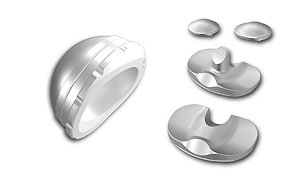
- Easy Size Interchangeability – bone cuts are the same for all 6 sizes. This provides intra-operative flexibility to change sizes without recutting the femur.
- Straightforward Gap Balancing Technique – instruments designed to provide a simple way to balance flexion and extension gaps and restore normal ligament tension.
- Procedural Efficiency – fewer instruments, pinless option, and “drill through” trials, allow surgeons to optimize positioning of the femoral component prior to peg prep.
- Navigation – designed for use with navigation software.
Confidence
- X3 Advanced Bearing Technology –Triathlon Partial Knee Resurfacing system utilizes Stryker’s proprietary X3 highly crosslinked bearing technology, which has shown a 96% decrease in wear in laboratory testing compared to competitive premium bearing surfaces in TKR’s.5
- Forgiving Design – the femoral component can withstand up to +/- 10 degrees of malalignment without edge loading.
References
1. Romagnoli, S. The adventures of unicondylar knee replacement. Proceedings from Current Concepts in Joint Replacement. Spring 2001, Paper 33.
2. Murry, D. Unicompartmental knee replacement: Now or Never? Orthopedics, 23: 980, September 2000.
3. Wang H, et al: A Biomechanical Comparison Between the Single-Axis and Multi-Axis Total Knee Arthroplasty System For The Stand-To-Sit Movement, Clinical biomechanics. 2005 May; 20(4): 428-33.
4. Iwaki, H., V. Pinskerova, and M. A. R. Freeman. "Tibiofemoral Movement 1:the Shapes and Relative Movements of the Femur and Tibia in the Unloaded Cadaver Knee." The Journal of Bone & Joint Surgery (Br) 82-B (2000): 1189-1195.
5. Knee Simulator Wear Evaluation of PS Components: Stryker Orthopaedics Triathlon (N2Vac and X3)